

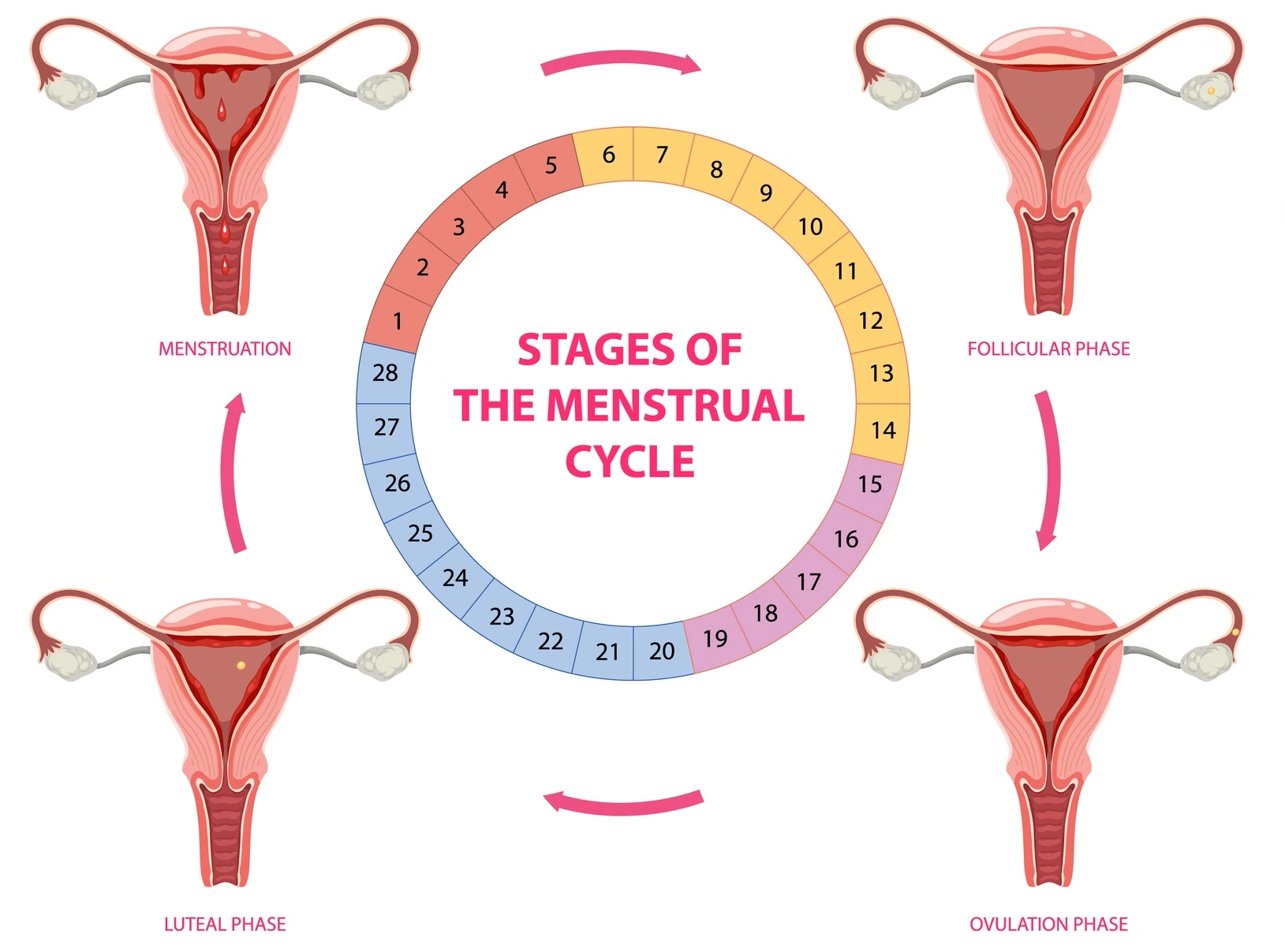
Your menstrual cycle is a natural part of your overall health, and understanding it can help you detect changes early, manage symptoms better, and know when to seek medical advice. While every woman’s body is unique, there are patterns that are considered normal and signs that something may need attention.
What’s Normal?
- Cycle Length
A normal menstrual cycle ranges between 21 to 35 days, counted from the first day of bleeding to the start of the next period. Slight variations from month to month are normal.
- Period Duration
Bleeding lasts 2 to 7 days is typical. Flow may start light, get heavier, and reduce again toward the end
- Flow Pattern
Light, moderate, or heavy flow can all be normal if it is consistent for you. Small blood clots may also occur, especially on heavier days.
- Mild Symptoms
It’s normal to experience:
- Mild cramps
- Bloating
- Mood changes
- Breast tenderness
- Low back discomfort
These should be manageable and not interfere heavily with daily activities.
What’s Not Normal?
- Very Heavy Bleeding
Bleeding that soaks a pad/tampon every 1–2 hours, passing large clots, or bleeding longer than 7 days could indicate fibroids, hormonal imbalance, or other conditions.
2. Extremely Painful Periods
Severe cramps that stop you from carrying out normal tasks are not normal. Conditions like endometriosis, adenomyosis, or pelvic inflammatory disease may cause this.
3. Irregular Cycles
Skipping periods frequently, having cycles shorter than 21 days or longer than 35 days, or sudden changes in your cycle could be due to stress, thyroid problems, or hormonal issues.
- Bleeding Between Periods
Spotting or bleeding outside your regular cycle especially after sex could signal infections, hormonal imbalance, or cervical issues.
- Absent Periods
Missing your period for three months or more (when not pregnant, breastfeeding, or certain contraceptives) requires medical evaluation.
- Severe PMS or Mood Changes
If mood swings, anxiety, or depression worsen around your cycle and affect daily life, it may be PMDD (Premenstrual Dysphoric Disorder) a condition that needs attention.
When to Seek Help
Talk to a healthcare provider if you notice:
- Sudden changes in your cycle
- Pain that is worsening over time
- Very heavy bleeding
- Periods stopping unexpectedly
- Symptoms affecting your daily life
Early evaluation helps prevent complications and ensures your reproductive health stays on track.
Final Note
Understanding what’s normal and what isn’t empowers you to take charge of your menstrual health. Your cycle is your body’s way of communicating to listen to it, tracking it, and talking to a professional when something doesn’t feel right.