

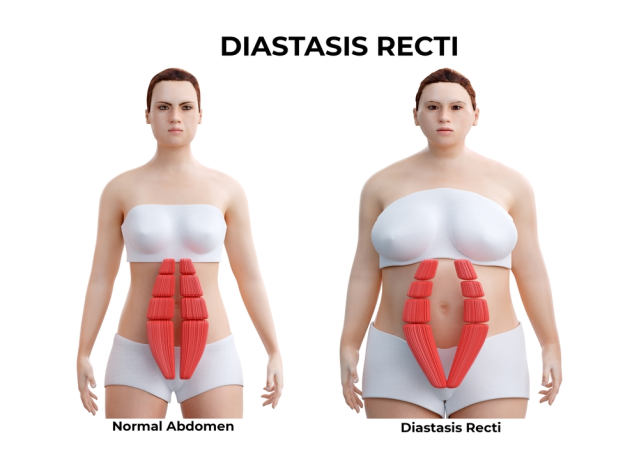
Diastasis recti is a common women’s health condition that involves the separation of the two vertical abdominal muscles (rectus abdominis) along the midline of the abdomen. This separation occurs at the connective tissue called the linea alba and is most often associated with pregnancy and the postpartum period, though it can affect women at different life stages.
Why Diastasis Recti Matters in Women’s Health
During pregnancy, a woman’s body undergoes significant physical and hormonal changes. As the uterus expands, it places increasing pressure on the abdominal wall. At the same time, pregnancy hormones soften connective tissues, allowing the abdomen to stretch to accommodate the growing baby. These changes make women particularly vulnerable to developing diastasis recti. Beyond pregnancy, factors such as multiple pregnancies, carrying a large baby, rapid weight changes, poor posture, improper exercise, and repeated heavy lifting can increase the risk. Diastasis recti is not just a cosmetic issue. It has important implications for a woman’s core strength, posture, pelvic floor function, and overall quality of life.
Signs and Symptoms
Women with diastasis recti may notice:
- A visible bulge or ridge along the middle of the abdomen, especially when sitting up or straining
- A persistent “mommy tummy” that does not flatten with weight loss
- Core weakness or poor abdominal control
- Lower back pain
- Poor posture
- Difficulty lifting or performing daily tasks
- In some cases, pelvic floor symptoms such as urinary leakage
Pain is not always present, which is why many women may not realize they have the condition.
Connection to Pelvic Floor Health
The abdominal muscles and pelvic floor work together to support the spine, internal organs, and body movement. When diastasis recti is present, this support system may be weakened. As a result, women may experience pelvic floor dysfunction, especially during the postpartum period. This makes proper assessment and management an important part of comprehensive women’s health care.
Diagnosis
Diastasis recti are often diagnosed through a simple physical examination by a healthcare professional. In some cases, ultrasound imaging may be used to measure the width and depth of the muscle separation more accurately.
Management and Treatment
Many women can improve diastasis recti with non-surgical management, especially when addressed early.
- Exercise and Physiotherapy: Targeted exercises that strengthen the deep core muscles, particularly the transverse abdominis, are essential. Gentle core engagement, breathing techniques, and guided rehabilitation exercises are recommended. Traditional sit-ups and crunches should be avoided initially, as they may worsen the separation.
- Lifestyle and Posture: Maintaining good posture, using proper lifting techniques, and avoiding activities that cause abdominal bulging can support recovery.
- Support Garments: Postpartum abdominal binders or support belts may offer temporary comfort and support, especially in the early recovery period.
- Surgical Options: Surgery is usually reserved for severe cases where conservative treatment has not been effective or when associated with hernias or significant functional limitations.
When to Seek Help
Women should seek professional guidance if abdominal bulging, back pain, or core weakness persists months after childbirth or interferes with daily activities.
Conclusion
Diastasis recti is a common but often overlooked women’s health condition. With proper education, early recognition, and guided management, many women can regain core strength and improve their overall wellbeing. Addressing diastasis recti is an important step toward long-term physical health and confident postpartum recovery.