

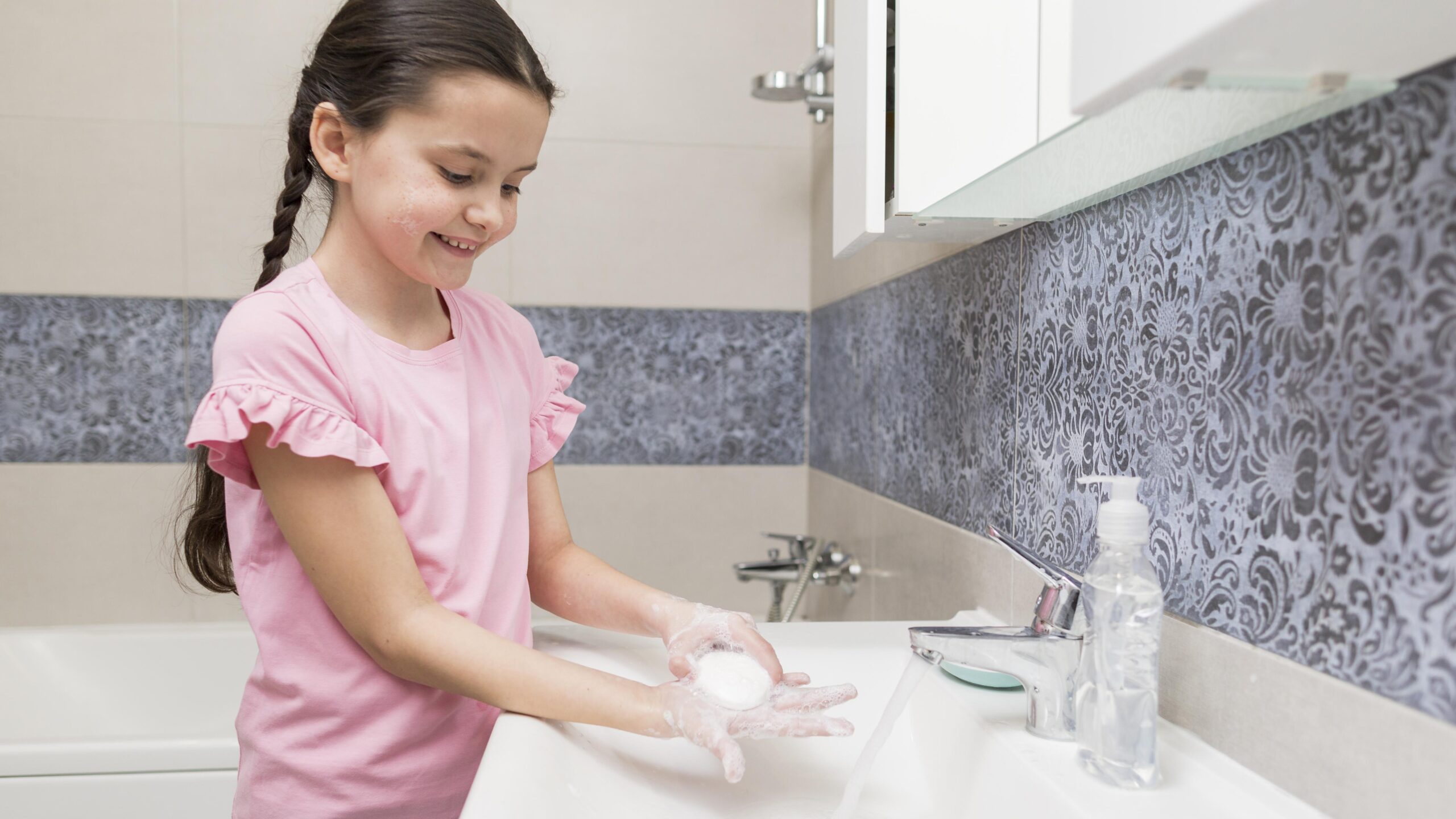
Teaching children proper hand washing and hygiene habits from a young age is one of the simplest yet most effective ways to protect their health. Children explore their world through touch, making them more likely to pick up germs that cause illnesses such as diarrhea, colds, and flu. By encouraging regular hand washing, we significantly reduce the spread of infections and help children stay healthy and active.
Hand washing remains the first line of defense against many common childhood diseases. Children should be taught to wash their hands with soap and water for at least 20 seconds cleaning the palms, back of the hands, between fingers, and under the nails. Key moments include before eating, after using the toilet, after playing, and after coughing or sneezing.
Beyond hand washing, good hygiene habits such as bathing regularly, brushing teeth twice daily, trimming nails, and avoiding the sharing of personal items also contribute to overall well-being. These routines help children feel fresh, confident, and comfortable in social and school environments.
Parents and caregivers play a vital role in building these habits. Making hand washing fun through songs, colorful soaps, or timer games can motivate younger children. Leading by example is equally powerful, as children often imitate what they see adults do. Establishing consistent routines at home and reinforcing them at school ensures that hygiene becomes a natural part of daily life.
By teaching and modeling good hygiene, we empower children to protect themselves from preventable illnesses and build healthy habits that last a lifetime. When children learn these practices early, they grow up more confident, healthier, and better prepared to thrive.